

Why Homeowners in Fairfield County Care About Exterior Maintenance
Coastal salt exposure and damp conditions mean Fairfield County homes need more frequent professional cleaning than the national average. Curb appeal, HOA compliance, and property value all depend on keeping up with it.
What is Soft Washing?
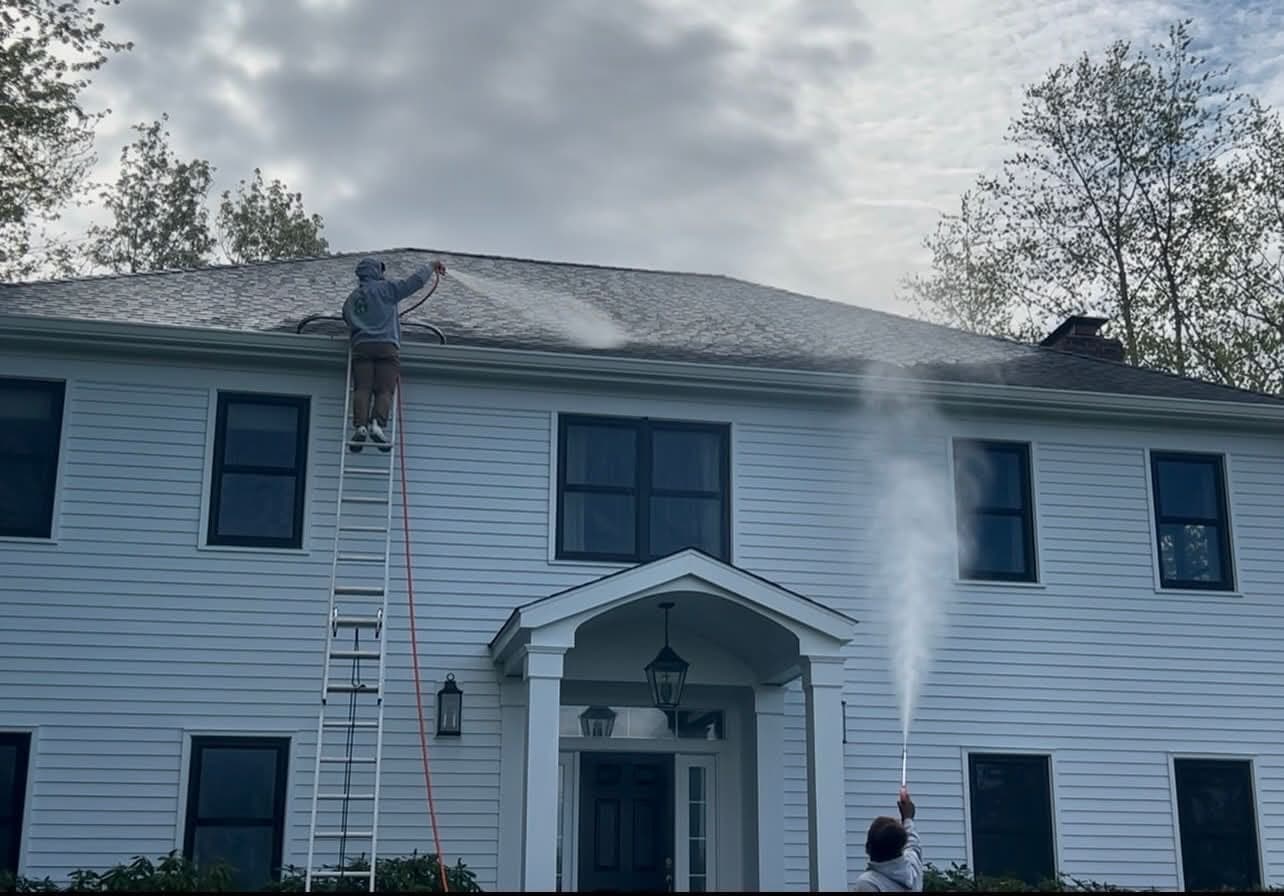
Soft washing is a low-pressure cleaning method that uses professional cleaning solutions and water. Rather than relying on force, it uses specialized detergents to break down algae, mold, moss, and bacteria before a gentle rinse. Ideal surfaces include roof shingles, vinyl siding, painted wood, stucco, and screens.
What is Power Washing?
Power washing uses high-pressure water — typically 1,500 to over 4,000 PSI — to blast away dirt, grime, and tough stains from hard surfaces. Some equipment includes heated water systems for enhanced grease removal. Best for driveways, concrete patios, brick walkways, and stone retaining walls.
Key Differences: Soft Washing vs. Power Washing
Soft washing operates below 500 PSI and excels against organic growth like algae, mold, and mildew. Power washing operates at 1,500–4,000+ PSI and is built for removing dirt, grease, and grime from hardscapes. Choosing the wrong method can damage your home's exterior or leave stains untouched.
When Power Washing Works Best
Power washing is ideal for sidewalks, garages, and decks, and it excellently prepares surfaces for painting or staining. However, high pressure risks cracking siding, chipping paint, or forcing water into foundation crevices — never use it on roof shingles or older wood structures.
Which Method is Safer for Your Home?
Soft washing is gentler for cedar shake, stucco, and vinyl because it relies on low pressure and surface-appropriate detergents. Power washing can strip paint or damage mortar joints if misapplied. When in doubt, soft washing is the safer starting point for delicate surfaces.